
Choosing the wrong manufacturer for a display unit rarely shows on the day the order is signed. It shows weeks later: when the prototype looks nothing like the render, when the production run arrives with differences from one store to the next, or when the campaign launches and half the network is missing pieces.
This guide sums up the questions worth asking before awarding a retail furniture or POS display project. It is written for purchasing, trade marketing and expansion teams comparing several suppliers, and it applies as much to a one-off piece as to a roll-out across hundreds of stores.
1. Manufacturer or intermediary: the first question
The sector is made up of both manufacturers with their own workshops and companies that design and subcontract production. Both models can work, but they do not offer the same control over quality, lead times and last-minute changes.
When the company quoting you is the one that manufactures, a production problem is solved in its own plant. When there are intermediaries, every adjustment passes through more hands and responsibility gets diluted between suppliers.
What to ask:
- Which processes do you carry out in your own factory, and which do you subcontract?
- Can I see real photos of production and of installed pieces, not just renders?
- If a piece arrives at a store with a defect, who is responsible, and how quickly is it dealt with?
Red flag: vague answers about where things are made, or a portfolio made up almost entirely of renders.
2. Real capacity: machinery, trades and space
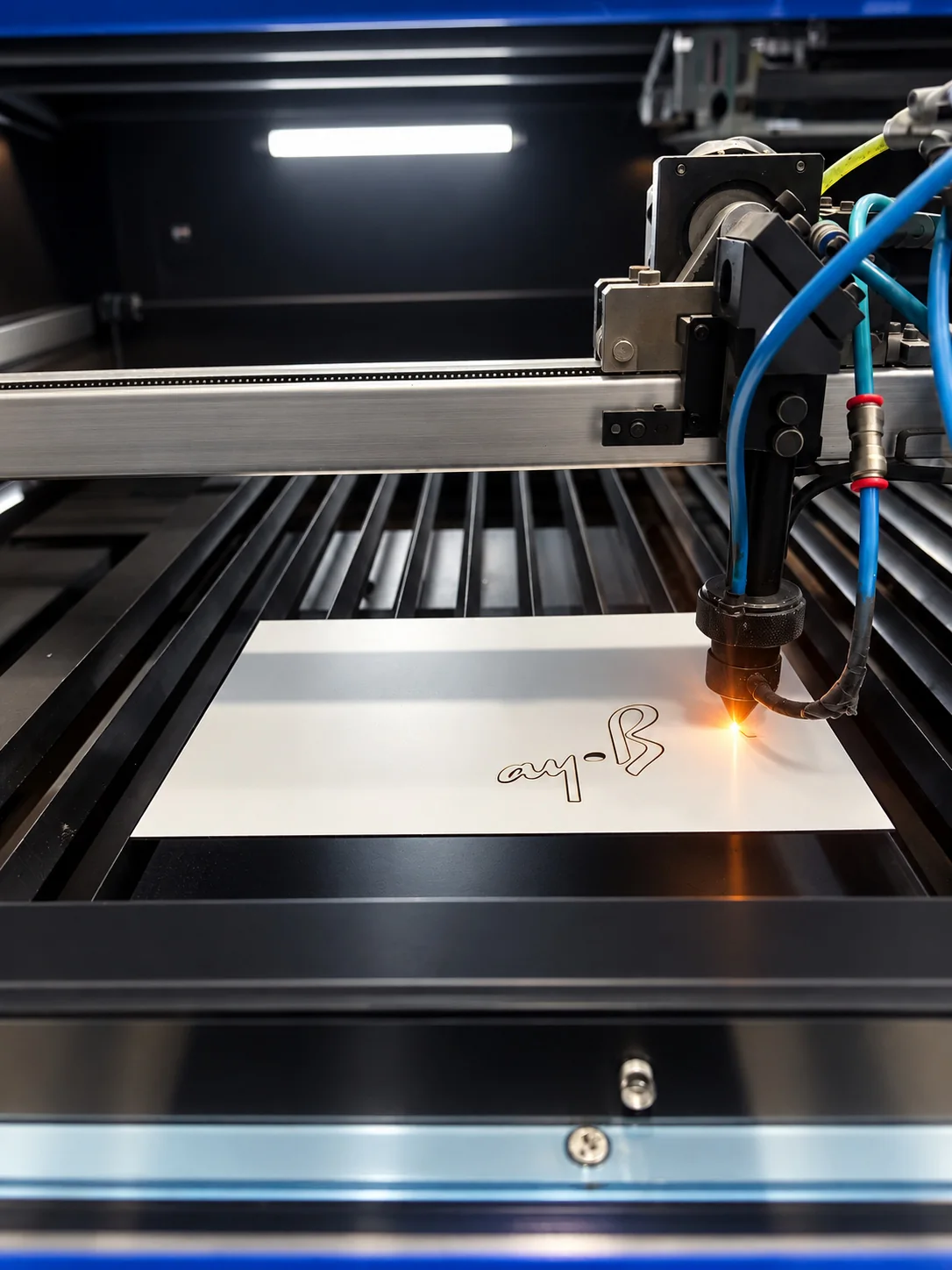
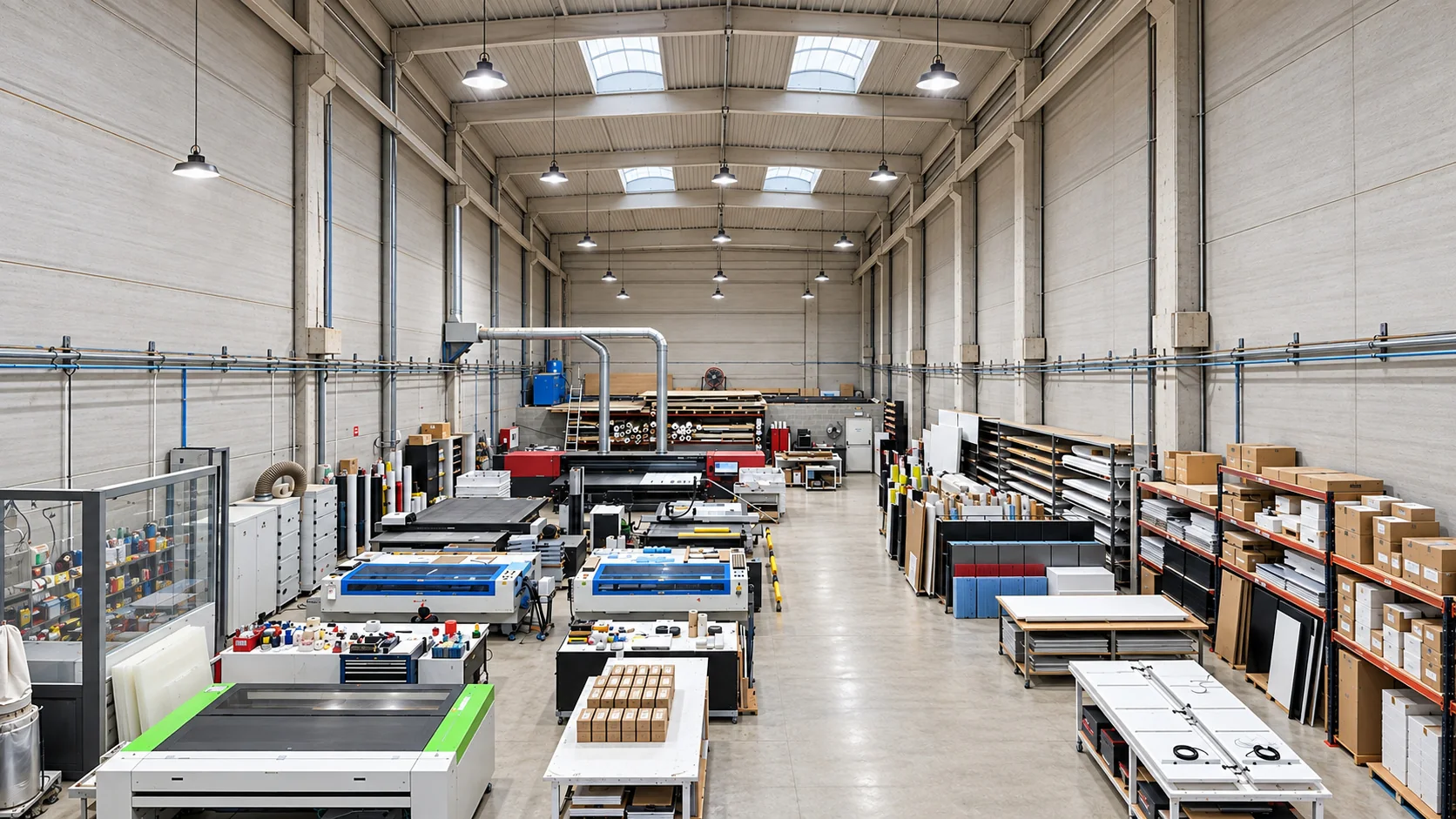
A display unit brings together several trades: board cutting and CNC routing, joinery, acrylic work, lacquering, graphics printing, lighting and assembly. The more of those processes take place in the same plant, the less you depend on third parties to meet the deadline and the easier it is to keep quality consistent.
Ask about the machinery (CNC, laser cutting, spray booth, large-format printing), the production floor space and the in-house team. Above all, ask how many projects of a similar size to yours they can handle at the same time.

3. Prototype before the production run
No render can replace a real piece. The prototype is the moment to check proportions, finishes, brand colours, strength, packaging and assembly before any mistake is multiplied across a hundred stores.
A good prototype phase includes:
- Final materials and finishes, not approximations.
- The real product placed on the piece, with its actual weight and dimensions.
- An assembly and disassembly test, especially if store staff are going to assemble it.
- Approval of the packaging the production run will travel in.
- A clear schedule for incorporating the changes that come out of the review.
Red flag: a supplier who suggests skipping the prototype to save time on a project with a large number of units.
4. Experience with equally demanding brands
Luxury, eyewear and cosmetics brands have strict brand guidelines and very tight tolerances on colour and finish. A manufacturer that has worked for brands with that level of demand is the best sign that it understands what is expected of it.
- Ask for case studies with photos of pieces installed in store.
- Ask for references from your sector, or from brands with similarly high standards.
- Check that it has experience with both one-off pieces and long production runs.
5. Realistic lead times, not optimistic ones
A good manufacturer does not give you the date you want to hear, but the one it can meet, and explains what it depends on: design approval, prototype, materials supply, production, transport and in-store installation.
- Ask for a phased schedule, with approval milestones on your side.
- Ask what happens to the final date if an approval is delayed by a week.
- Make sure the timeline covers packaging, transport and in-store installation, not just manufacturing.
If you want to understand what happens at each of those stages, we explain it step by step in how custom displays are made.
6. From pilot to roll-out: can it grow with you?
Many projects start with a pilot in a handful of stores and, if they work, are extended to the whole network. The supplier you choose has to be able to do both to the same standard: a meticulously finished short run and volume production with no differences between units.
- How do you guarantee that unit number three hundred is the same as the first?
- How is the piece documented so it can be repeated months later, when we open new stores?
- Can you supply the roll-out in waves, following the store opening schedule?
7. Logistics, installation and after-sales
The project does not end when the piece leaves the factory. Before you decide, be clear about who packs, who transports, who installs and who is responsible afterwards.
- Is the packaging designed so that each store receives its material complete and clearly labelled?
- Is installation carried out by the manufacturer, a third party or store staff?
- How are replacements, damaged pieces and graphics changes handled?
8. How to compare quotes
Two quotes for the same amount can include very different things. Before comparing figures, check that they all cover the same items:
- Technical design and manufacturing drawings.
- Prototype, and the number of rounds of changes included.
- Materials and finishes specified, not generic.
- Graphics and printing.
- Lighting and electrical or electronic components.
- Packaging and transport, and who takes care of installation.
- Replacements and after-sales service.
The lowest quote stops being the lowest if the prototype, transport or installation then have to be added as extras.
9. A point of contact who understands your business
In projects with many stores, several brands or tight deadlines, communication is almost as important as manufacturing. A single point of contact who knows the project from start to finish – and who talks directly to the factory – avoids misunderstandings, duplication and delays.
The checklist at a glance
| Question | Why it matters | Red flag |
|---|---|---|
| Do you manufacture in-house? | Direct control of quality and lead times | Vague answers; renders only |
| Which processes do you have in your factory? | Less dependence on third parties | Almost everything subcontracted |
| Do you make a prototype? | Catching mistakes before the production run | Suggesting skipping it |
| Which brands have you worked for? | Standards comparable to yours | No verifiable case studies |
| A phased schedule? | Credible lead times | A single date with no milestones |
| Pilot and roll-out? | Capacity to grow with you | No experience with long runs |
| Who coordinates delivery and is responsible afterwards? | The whole project, not just the piece | ‘That’s no longer our concern’ |
| What does the quote include? | Comparing like with like | Generic or missing line items |
If you are preparing a project and would like to run these questions past us, tell us what you need: we have been designing and manufacturing furniture and displays for fashion, eyewear, cosmetics and luxury brands for more than 50 years.