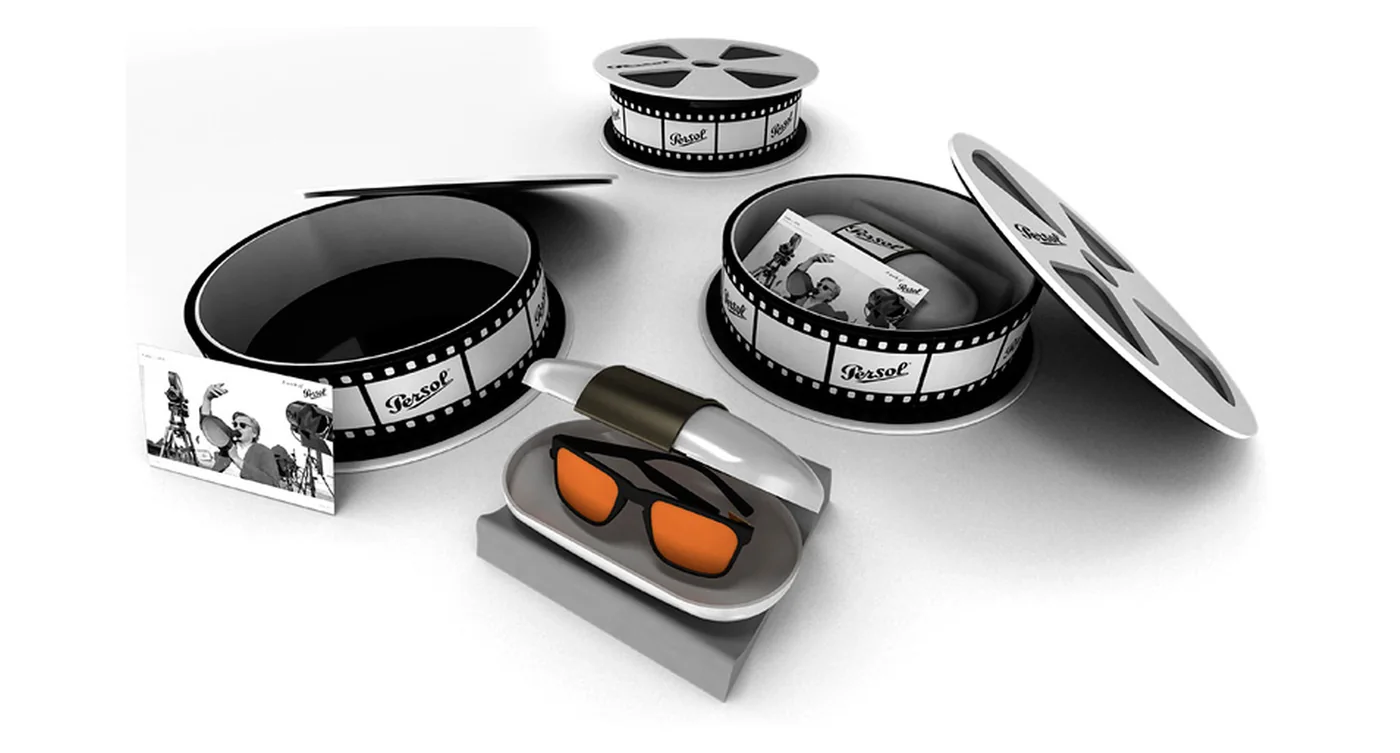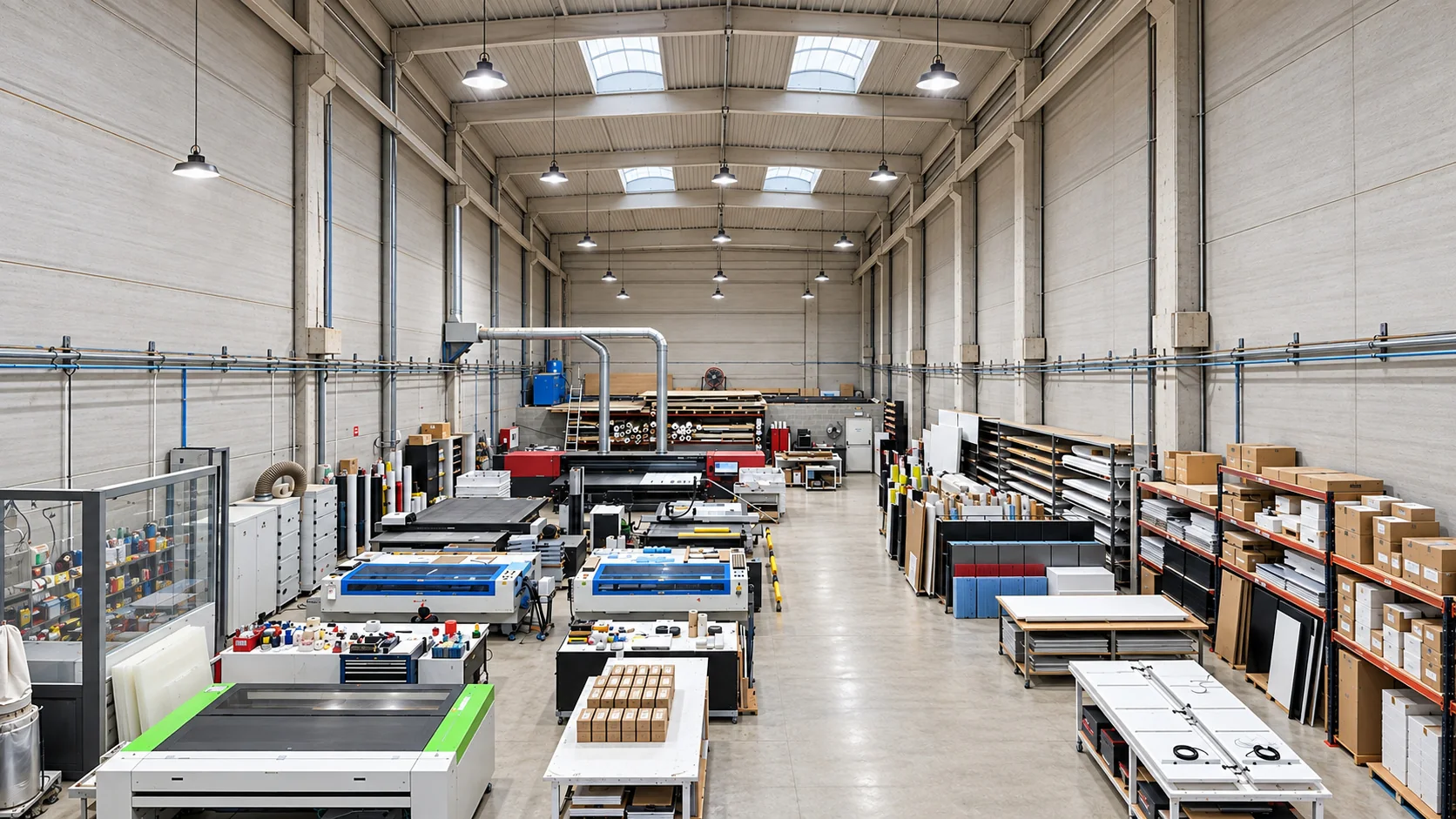

Behind a display that appears in store on launch day lie weeks of design, prototyping and manufacturing that the end customer never sees. Understanding that process helps you plan a campaign better, make sense of a quote and know when each decision is best made.
This is the full journey of a custom piece, just as we carry it out in our factory in Pallejà (Barcelona).
1. The briefing: what you need to know before drawing
Everything starts with a few answers. The clearer they are, the more accurate the first proposal will be:
- The product: what will be displayed, how many SKUs, their dimensions and weight.
- The space: counter, wall, floor or window, and the dimensions available.
- The scope: one store, a pilot or the whole network; one country or several.
- The date: the day the piece has to be in store.
- The duration: a campaign lasting a few weeks or a permanent piece.
- The brand: brand guidelines, graphics and, if there is one, an existing design.
If you already have a design, the next stage is to review it so it can be manufactured better. If you don't, we develop it with you from scratch.
2. Design and technical development
The design goes from an idea to a piece that can be manufactured: drawings, parts breakdown, materials, joints, hardware and finishes. This is where the things you cannot see in a render, but which decide the result, are resolved: how much weight each shelf can hold, how the piece is transported, how it is assembled and how the graphics are changed when the next campaign comes round.
3. Choosing the materials
Wood, metal, acrylic, glass, cardboard or stone: each material changes the look of the piece, its lifespan, its weight and its cost. The norm is to combine several in the same display, choosing each one for what it does best.
4. The prototype
Before series production, we make a first real piece with the final materials and finishes. This is the moment to check, with the real product, whether the proportions work, whether the colours match the brand, whether assembly is straightforward and whether the packaging protects the piece.
Changes that come out of this review are cheap. The same changes, discovered once the production run has been made, are not.
5. Industrialisation: preparing the production run
Once the prototype is approved, the piece is prepared so it can be produced many times over, exactly the same: machine programming, jigs, materials purchasing and documentation so that unit number one hundred is identical to the first… and so it can be repeated months later.
6. Cutting and machining: CNC and laser
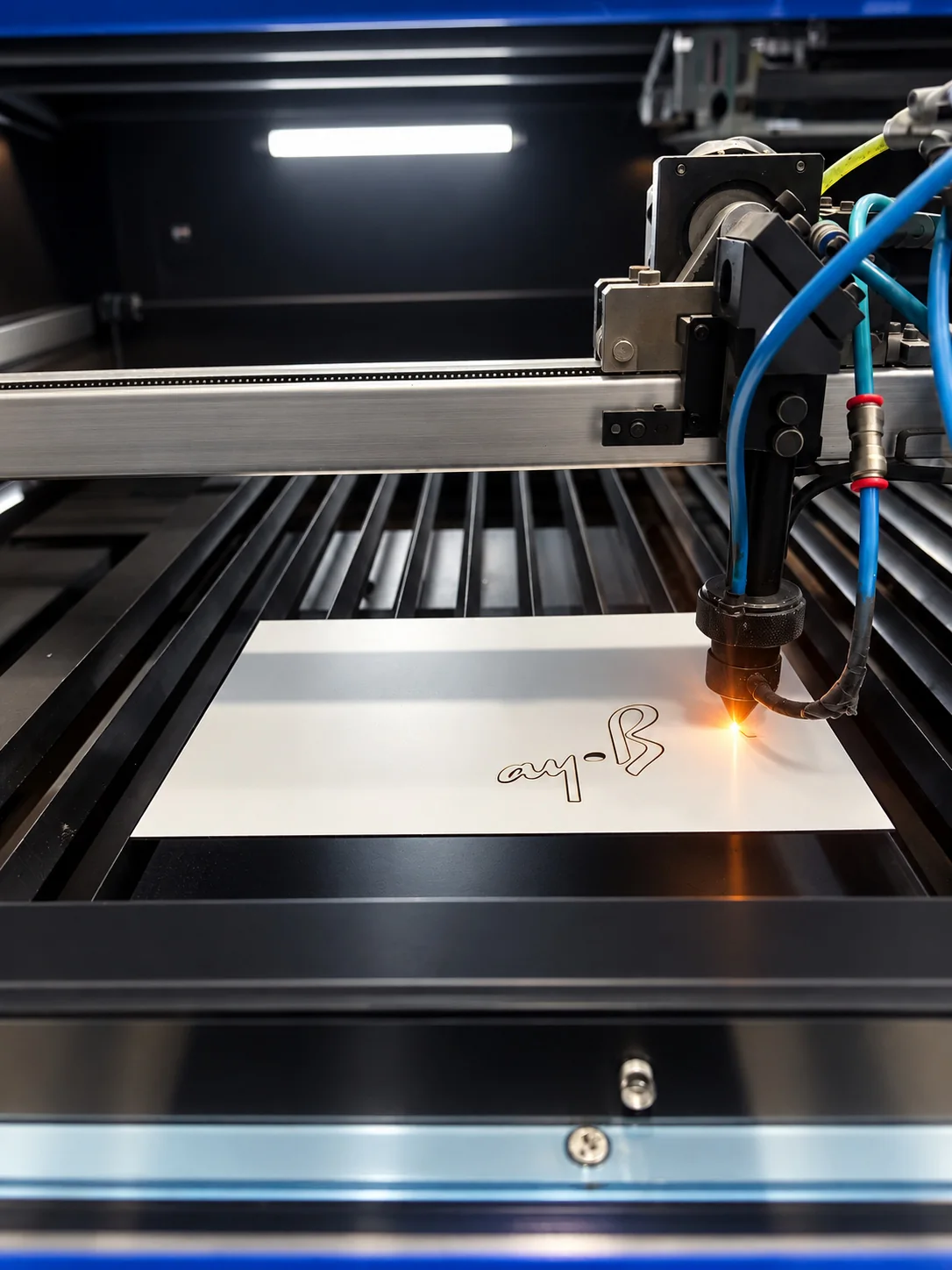
Boards are cut and routed by computer numerical control (CNC), which makes it possible to repeat complex shapes with the same precision across the whole run. Acrylic and other thin materials are laser cut, which leaves clean edges and allows engraving and very fine detail.

7. Finishes: sanding, lacquering and varnishing
This is the stage that most sets a premium piece apart from a merely adequate one. Parts are sanded and prepared by hand, then lacquered or varnished in a spray booth to achieve an even colour and a surface that stands up to the daily use of a store.


8. Graphics: large-format digital printing
Campaign graphics – fronts, panels, sides – are produced using large-format digital printing. Doing this in the same factory as the furniture means brand colour can be controlled and timings adjusted without depending on a third party.

9. Assembly and integration
During assembly, the parts are joined together and the elements that bring the display to life are integrated: lighting, hardware, mirrors, showcases or holders specific to each product. Assembling and checking every piece at the factory before packing it – even if it then travels disassembled to make transport easier – is the best way to catch any problem before it reaches the store.

10. Quality control and packaging
Quality control means comparing each piece with the approved prototype: dimensions, colour, finish and operation. Packaging is designed to suit the piece and its destination, so that it arrives intact and each store receives its material complete and clearly labelled.
11. Logistics and coordinating installation
In a single-store project, delivery is simple. In a roll-out to dozens or hundreds of points of sale, logistics is part of the project: routes, delivery dates coordinated with the campaign, and support in coordinating installation at each store with the brand's team or its installer.

12. After delivery
A good piece outlives a single campaign. Replacements, graphics changes, new units for stores that open later: having the project documented means they can be made identical months afterwards.
How long does the whole process take?
It depends on the number of units, the complexity of the piece, the materials and how quickly the design and prototype are approved. In a well-planned project, design, prototyping and production are measured in weeks, not months. The most useful approach is to start from the date the piece has to be in store and plan backwards.
If you are comparing suppliers for a project like this, you may find our checklist for choosing a retail display manufacturer useful.